 INFN-LNF Laboratori Nazionali di Frascati
CYGNO04 has begun operations at the Frascati National Laboratory. With a volume of 400 litres, the demonstrator is the world’s largest gaseous Time Projection Chamber (TPC) with optical readout.
CYGNO04 is the proof-of-concept detector of direct dark matter search experiment. It looks for light dark matter introducing a scientific and technical innovation by exploiting the directional reconstruction of low energy particle tracks. Its core consists in a TPC, result of years of R&D, design, test and construction carried out by the CYGNO group at LNF.
CYGNO04 consists of a PMMA (plexiglass) vessel which houses a central cathode, kept at ~ 50 kV, and two drift volumes each of 200 litres and equipped with 0.4 m2 triple GEM amplification system each. The detector uses a He/CF4 gas mixture at atmospheric pressure which, during amplification, can produce photons in a wavelength range close to 620 nm, detectable with Silicon Active Pixel Sensors CMOS-based and photomultipliers tubes (PMT). The former, with approximately 60 million pixels, will enable track reconstruction with an effective spatial granularity of about 135 × 135 μm² on the readout plane, while the eight PMTs will reconstruct the third coordinate by measuring the development of events perpendicular to the readout plane.
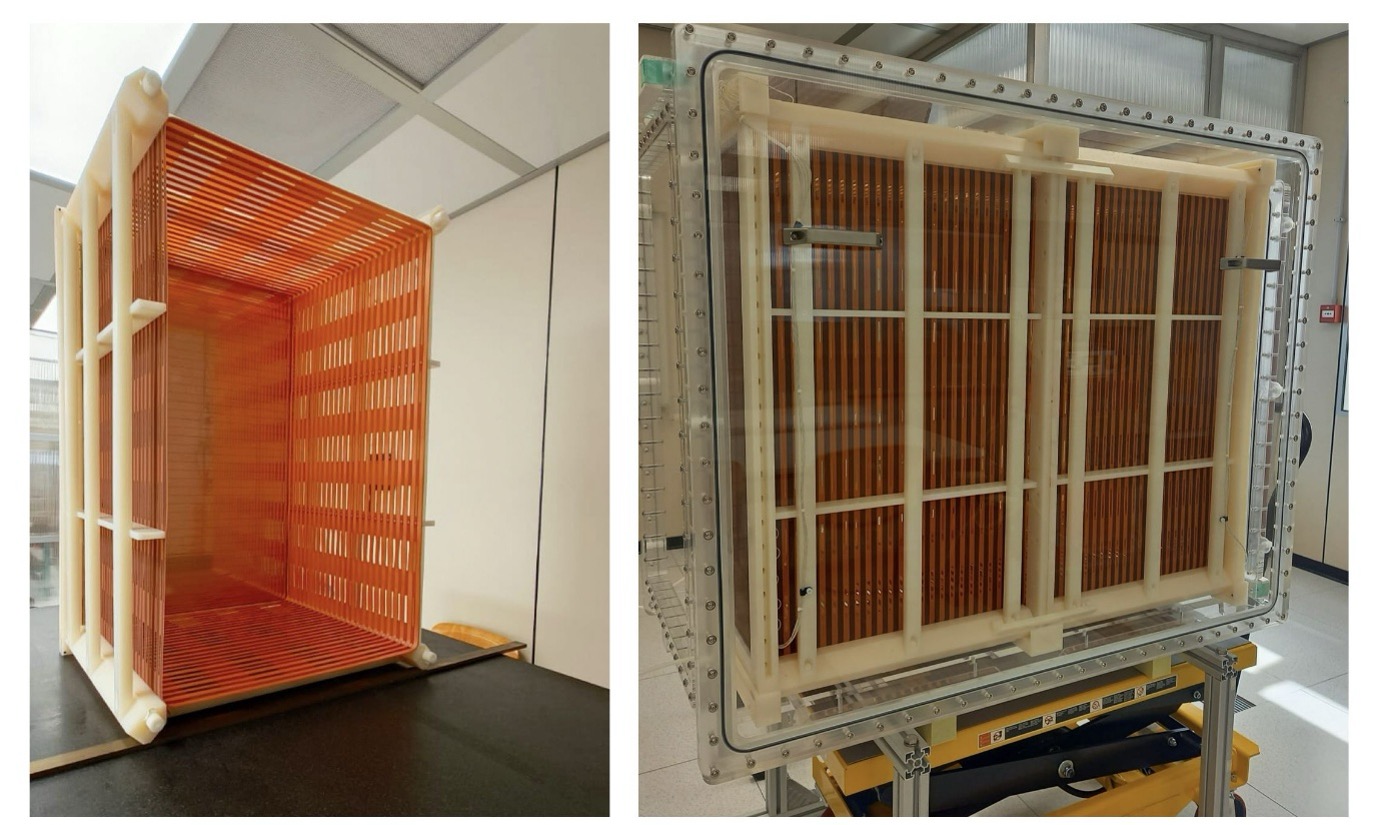
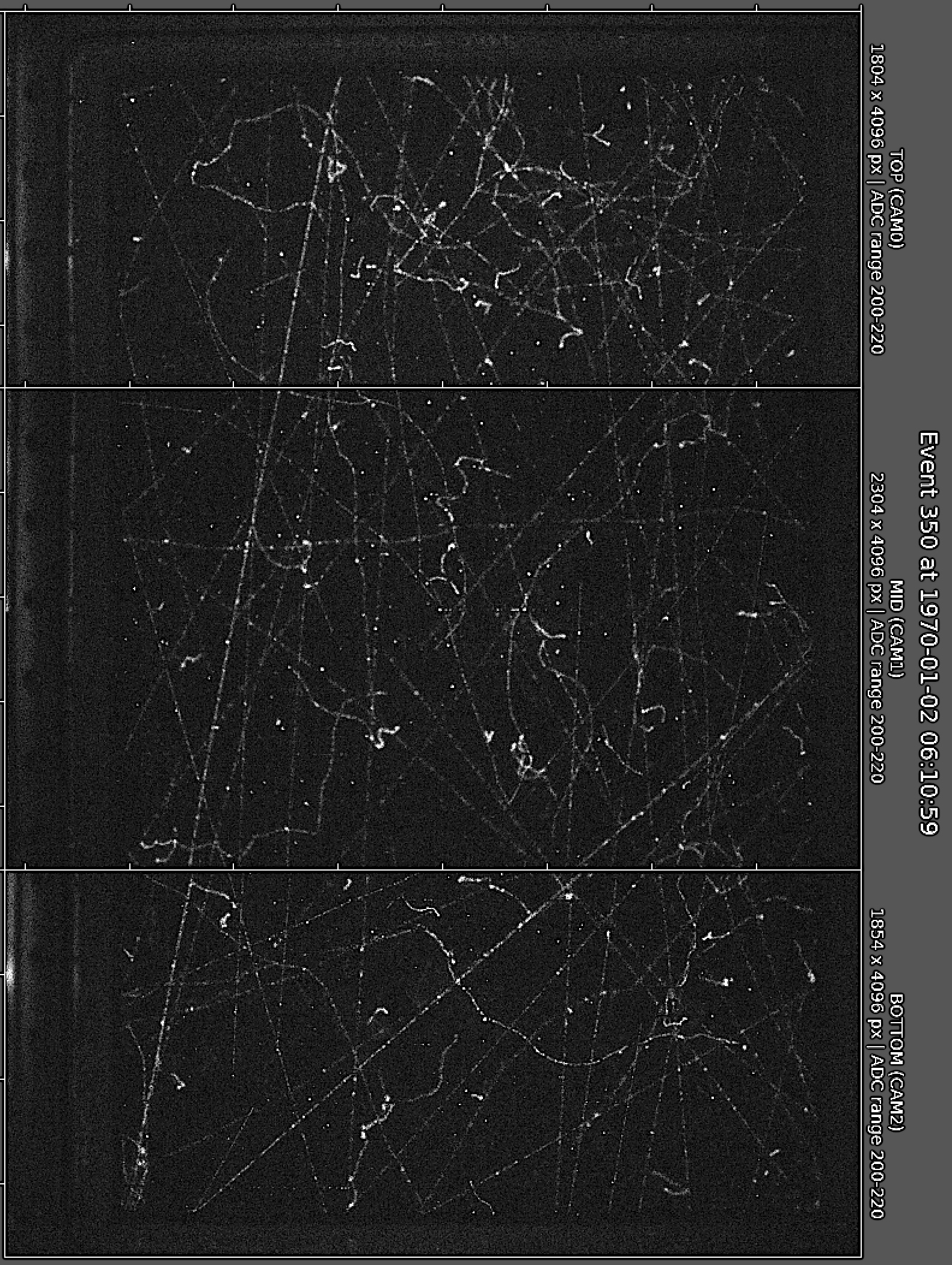
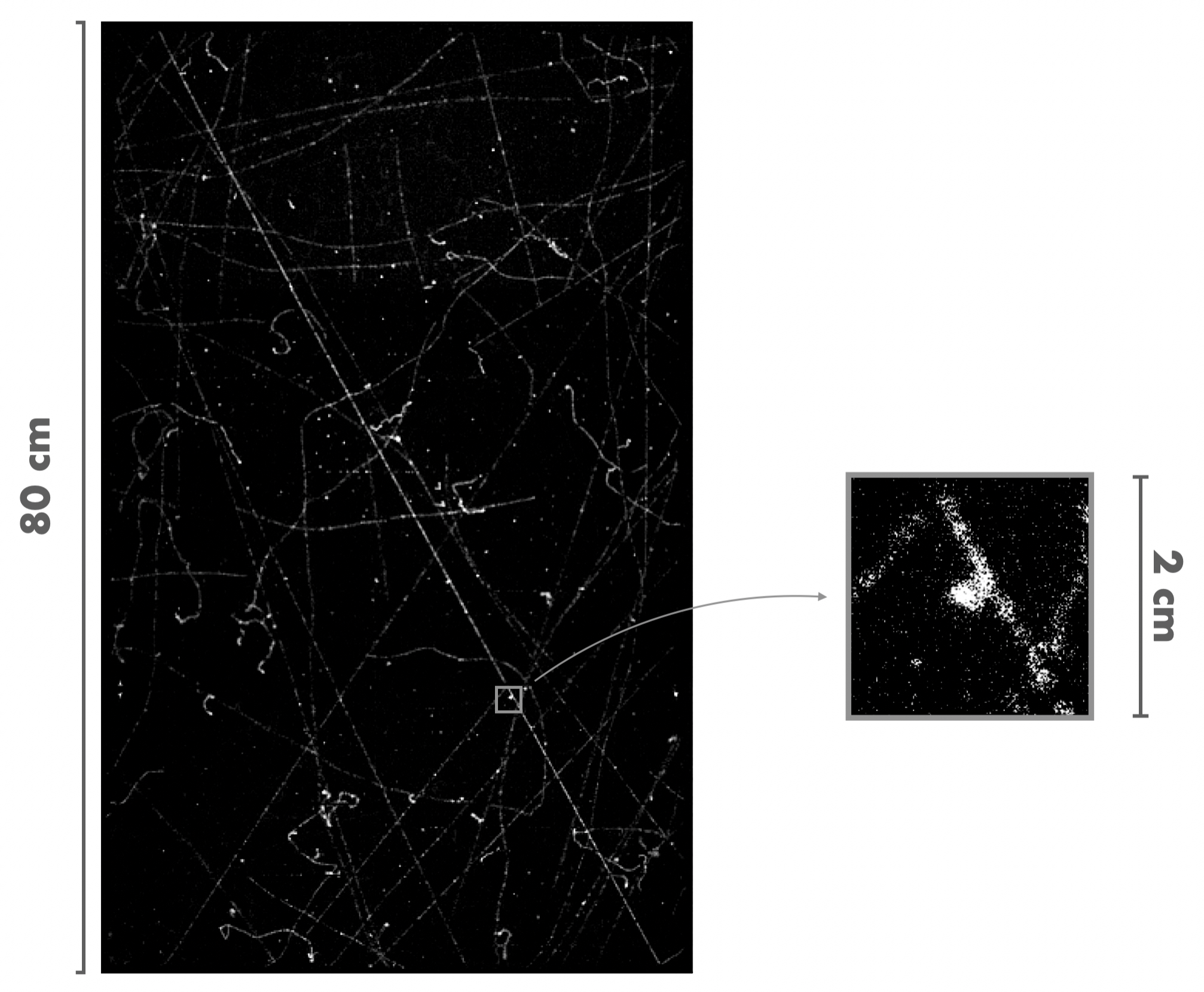
In the month of July, the different detector components were successfully assembled in the LNF clean chamber (Fig. 1), followed by the commissioning and testing of its electronic systems. After successfully passing the qualification tests, the detector began taking data, recording its first images of cosmic-ray events and natural radioactivity (Fig. 2). These preliminary results already highlight the detector’s remarkable potential to resolve the minute details that are crucial to the search for dark matter (Fig. 3).
Following this initial milestone, the next step will be to install CYGNO04 in Hall F at the Gran Sasso National Laboratory, inside a shielding structure made of copper, water and polyethylene. This setup is essential to reduce interference from cosmic rays and natural radioactivity, allowing the detector to search for signals from light dark matter and solar neutrinos.
CYGNO is an international collaboration that, in addition to INFN, brings together researchers from the University of Juiz de Fora and CBPF in Brazil, the University of Coimbra in Portugal, university groups from Sapienza University of Rome and Roma Tre University, the Gran Sasso Science Institute (GSSI), and the Laboratori Nazionali del Gran Sasso. The Frascati group is one of the collaboration’s key contributors and has held major responsibilities throughout the project—from its conception and R&D phases to the optimisation, design and construction of the detector. In particular, the Mechanical Design and Detector Development departments of the Research Division made a crucial contribution to achieving this important milestone.