

 INFN-LNF Laboratori Nazionali di Frascati
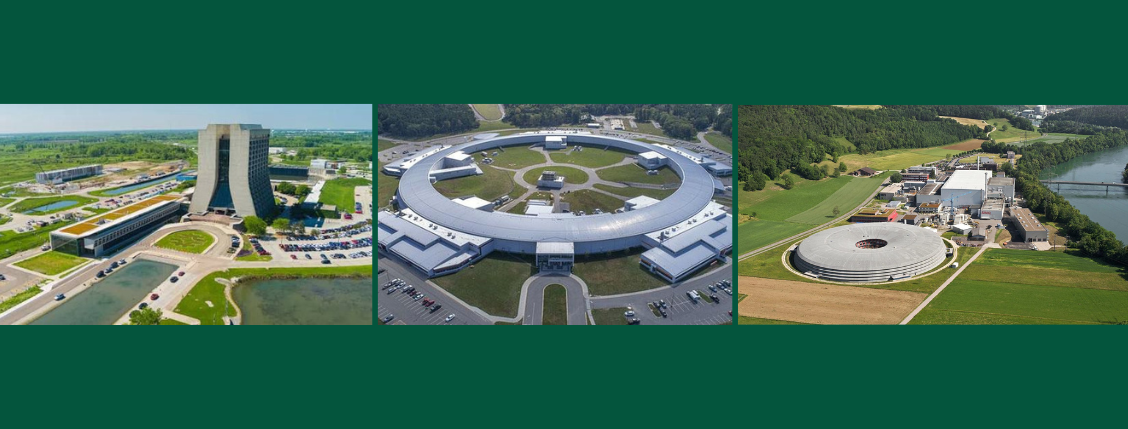 As part of the MSCA Staff Exchange programme, the European Commission has recently selected the NEMESIS project (Neutron Experiments join Muon Experiments for Synergy in Investigation and Search for new physics) for funding. This is a consortium made up of research institutions and industrial partners, led by the National Laboratory of Frascati (LNF) of INFN. NEMESIS brings together researchers from the European Union, Switzerland, and the United States to conduct cutting-edge research in particle physics beyond the Standard Model, combining the potential of muons and ultra-cold neutrons and developing a new generation of high-intensity particle beams and detectors.
The project aims to support research programs conducted at three prestigious international laboratories: Fermilab (FNAL) and Brookhaven National Laboratory (BNL) in the United States, and the Paul Scherrer Institute (PSI) in Switzerland.
Researchers involved in NEMESIS are participating in the Mu2e (FNAL) and MEG-II, Mu3e (PSI) experiments, which seek to observe charged lepton flavor violation (cLFV) for the first time, exploiting the most intense muon sources available worldwide. These experiments are expected to improve measurement sensitivity by four orders of magnitude, probing mass scales up to 10⁴ TeV. The collaboration fostered by NEMESIS between these experiments will significantly boost discovery potential and strengthen the interpretation of data in the event of a breakthrough observation.
NEMESIS will also play a key role in next-generation Electric Dipole Moment (EDM) measurements of both muons and neutrons, crucial for understanding the matter–antimatter asymmetry of the Universe. The measurements will exploit the novel frozen-spin technique, which suppresses the muon spin precession in the orbital plane (muEDM), and high-intensity ultracold neutron beams (n2EDM) with kinetic energy below 300 neV, allowing for unprecedented sensitivity. In this area as well, the collaboration will combine expertise and resources across its research groups to precisely determine the EDM.
Alongside fundamental research, NEMESIS will serve as a platform for innovative particle detectors and for improving the manipulation, monitoring, and quality of high-intensity beams of muons and ultracold neutron beam technologies, with potential applications in materials science, medical physics, and homeland security.
Dr. Simona Giovannella, senior researcher at LNF, will act as International Coordinator, continuing the successful path of international collaboration initiated with the MUSE and aMUSE projects.